
Discover Sofia
Sofia Beyond the Postcards: 8 Places Worth Discovering
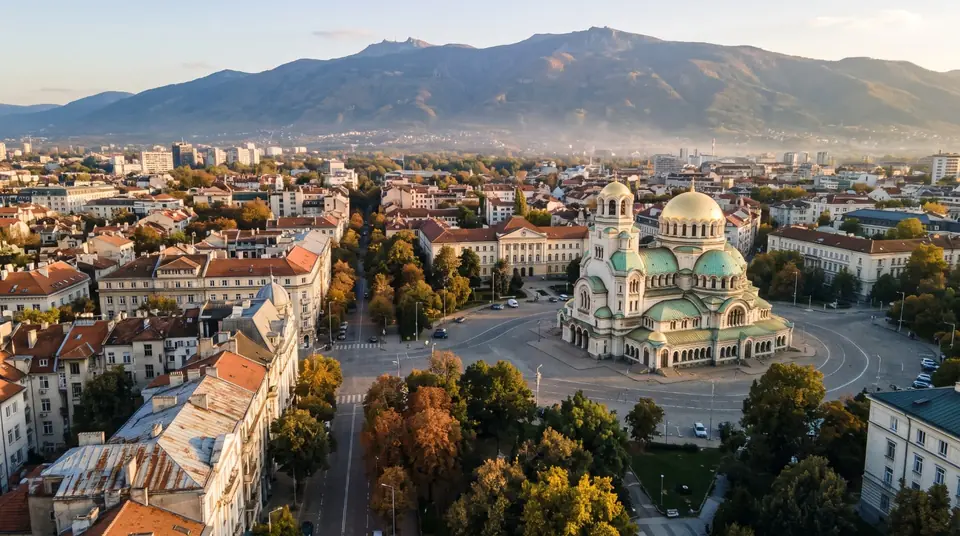
Every visitor sees the golden domes of Alexander Nevsky Cathedral. Fewer notice the Roman street under a metro station, the market hall that has been feeding Sofia for over a century, or the museum where the statues of a vanished era now stand in a garden. This route pairs the famous with the less obvious, in an order that makes sense on foot.
How the route works
Six of the eight places are close enough to walk between in a relaxed half day, on flat streets and the city’s famous yellow-brick paving. The last two, the Museum of Socialist Art and Boyana Church, are a short ride away and fit well on a second outing. Wear comfortable shoes, carry water, and cover your shoulders for the churches and the synagogue.
1. Alexander Nevsky Cathedral and its crypt
Why it is worth it: it is the postcard, and it deserves the time. Construction began in 1882, with most of the building completed between 1904 and 1912. Go inside for the scale of the interior.
The part people skip: the crypt, which holds the National Gallery’s collection of icons and has its own entrance and ticket. It is a quiet counterpoint to the crowds above.
Tip: start here in the morning, before tour groups arrive.
2. The Serdica archaeological complex
Why it is worth it: the Sofia you walk on stands on top of Roman Serdica. At Serdika metro station you can walk among excavated streets and buildings under the modern city.
Tip: look down as you walk the area around the station; ruins are visible at several points. The Visit Sofia page on archaeological monuments lists the other Roman sites.
3. The Rotunda of St George
Why it is worth it: a fourth-century brick rotunda, the oldest preserved building in Sofia, hidden in a courtyard surrounded by government buildings and a hotel. The setting is part of its charm.
Tip: it is a working church, so be quiet and respectful, and watch for services.
4. The Sofia Synagogue
Why it is worth it: opened in 1909 in a Moorish Revival style, it is one of the largest Sephardic synagogues in Europe, and a reminder of Sofia’s long history of living side by side with other faiths. The synagogue, the Banya Bashi Mosque and the baths building below sit within a few minutes’ walk of each other.
Tip: visiting days are limited and security checks are normal, so check the official visiting information before you go.
5. The Central Mineral Baths
Why it is worth it: built between 1906 and 1913, the building’s tiled facade is among the city’s most striking. It has housed the Sofia History Museum since 2015, and the story of the city’s hot springs is part of why Sofia exists here at all.
The detail locals know: beside the building is a public mineral spring where people fill bottles of warm water. Follow any posted notices.
6. The Central Market Hall
Why it is worth it: a grand early-twentieth-century hall of food stalls, from cheese and cured meats to pastries and spices. It is the easiest way to taste Bulgaria without a menu.
Tip: hours vary by stall and the sources we found did not agree, so check the official site. Go hungry, and try a slice of fresh banitsa and some local cheese.
7. The Museum of Socialist Art
Why it is worth it: an honest look at the decades of Bulgaria’s socialist period through the art of the time, with an outdoor garden of monumental sculptures. It is a good place to understand the Sofia you see in the city’s architecture.
Tip: the National Gallery’s page lists it as open Tuesday to Sunday and closed on Mondays. Confirm the hours and prices on the official page.
8. Boyana Church
Why it is worth it: a UNESCO World Heritage site since 1979, with frescoes painted in 1259 that include the portraits of the patrons Kaloyan and Desislava. It is among the finest medieval paintings in Europe, and it sits in Boyana at the foot of Vitosha.
Tip: the building is small and access is managed, so expect a short wait at busy times. Check the visitor information on the official site and combine it with a walk toward Vitosha; our Vitosha guide shows how.
A sensible order
- Morning: Alexander Nevsky Cathedral and the crypt.
- Walk toward Serdika: the Serdica complex, then the Rotunda of St George.
- Late morning: the Synagogue, the Central Mineral Baths and its museum.
- Lunch: the Central Market Hall.
- Another day, or an afternoon ride: the Museum of Socialist Art and Boyana Church.
Prefer an itinerary built around food and a day on the mountain? See A Weekend in Sofia.
Practical tips
- Many museums close one day a week, often Monday, so plan around it.
- Churches and the synagogue expect modest dress and quiet. Check each place’s photography rules.
- Carry some cash and a card; small shops and stalls vary.
- Sofia’s centre is compact, so the metro and walking cover almost everything on this list.
Sources and checks
Details last checked on 27 October 2026. Opening days, hours and ticket prices change and were inconsistent across sources, so we point you to each place’s official page instead of quoting them. Where a day of the week is mentioned, it comes from that place’s official page.
- Visit Sofia: archaeological monuments — official Sofia tourism site
- Visit Sofia: the Central Mineral Baths building — official Sofia tourism site
- Visit Sofia: museums — official Sofia tourism site
- Boyana Church (National History Museum) — history, and a link to the visitor information page
- National Gallery: Museum of Art from the Socialist Period — opening days and tickets
- Sofia Synagogue — visiting information
- Sofia History Museum — housed in the Central Mineral Baths building
- Central Sofia Market Hall — official site of the market hall
Thinking of living in Sofia?
Knowing the city helps you choose the right home. Tell us what you are looking for and we will help you find a long-term apartment that fits your routine.
Related guides
Vitosha Mountain: The Local’s Guide to Escaping Sofia
How to reach Vitosha from Sofia, easy walks versus demanding hikes, what to carry, and what to check about buses and lifts before you go.
Read the guide
A Weekend in Sofia: City Streets, Great Food and a Day on Vitosha
A realistic two-day plan: a day of central Sofia and Bulgarian food, a day on Vitosha, and what to do instead when the weather turns.
Read the guide
How to Rent an Apartment in Sofia: A Guide for Expats
Finding an apartment, choosing a neighbourhood, understanding costs and contracts, and what to check at a viewing.
Read the guide